Tasmania is the kind of place where the scenery can change completely in the space of a single drive. One minute you’re following a road through green farmland and vineyards; the next, you’re standing beneath pink-granite mountains, walking through ancient rainforest or looking across a wild stretch of Southern Ocean.
Cradle Mountain, Wineglass Bay, MONA and Port Arthur are the famous names, but some of Tasmania’s most memorable experiences are much smaller. A steaming sauna floating on a lake, orange-covered boulders beside impossibly clear water, a tiny town called Penguin or an old railway disappearing into west-coast rainforest can be every bit as memorable.
Relax in the world's most beautiful bathtub
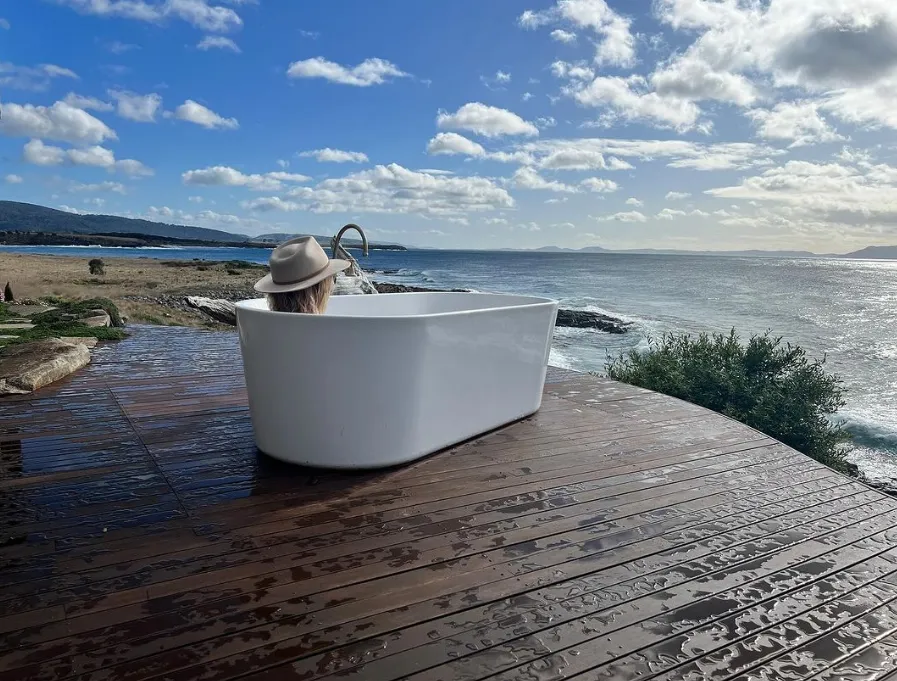
There are baths with a view, and then there’s the outdoor bathtub at Thalia Haven on Tasmania’s east coast.
Set against an isolated coastal landscape, it’s a place where the view matters more than the bath itself. Open sky stretches overhead, wild Tasmanian coastline fills the horizon, and there’s very little around to interrupt the sense of being properly remote.
I’d treat Thalia Haven as part of the experience rather than simply accommodation for the night. Stay long enough to slow down, then continue along the east coast towards Freycinet and Coles Bay.
You can run through lavender fields at Bridestowe Estate
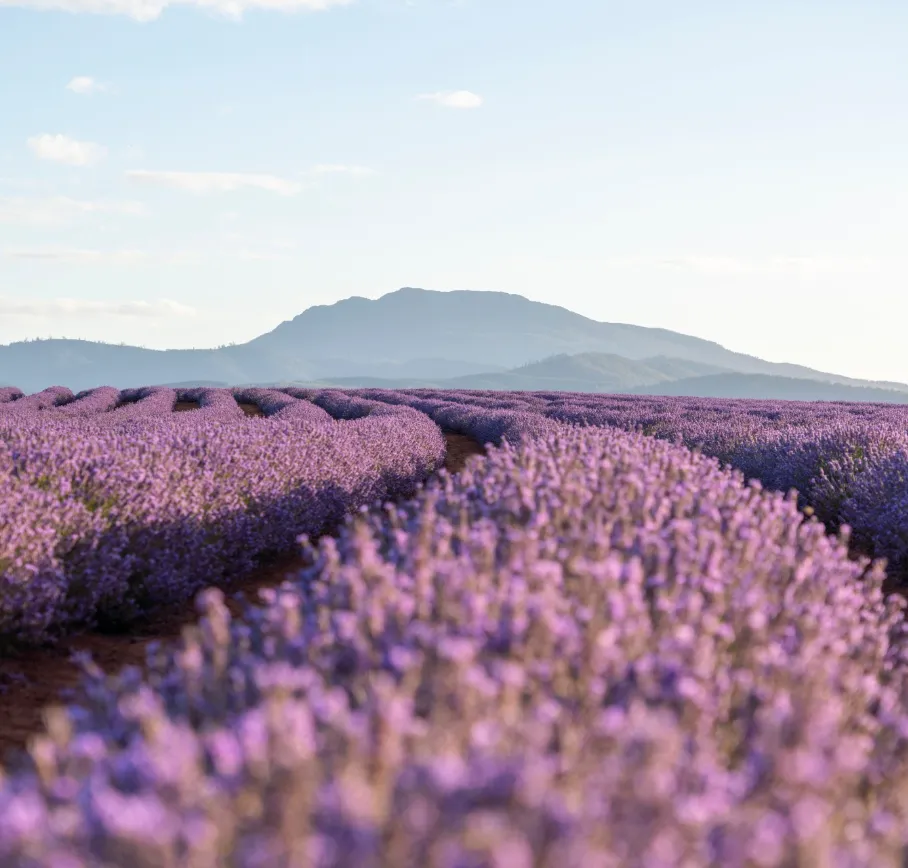
For a few weeks each summer, Bridestowe Lavender Estate becomes one enormous sweep of purple.
Rows of lavender roll across the landscape against the green Tasmanian countryside, creating one of northern Tasmania’s most instantly recognisable scenes.
Timing is crucial. Lavender generally flowers in December and January, with peak colour usually from mid-December to mid-January, depending on the season. Harvesting normally begins later in January and continues into February.
Come at the right time, and Bridestowe is spectacular. Arrive several months later expecting purple fields,s and you’ll find a very different landscape.
The Hazards
Few mountain backdrops in Tasmania are as distinctive as The Hazards.
These great pink-granite peaks rise immediately behind Coles Bay and dominate the landscape around Freycinet National Park. Their colour shifts with the light — sometimes grey and rugged, sometimes warm pink or orange towards the beginning and end of the day.
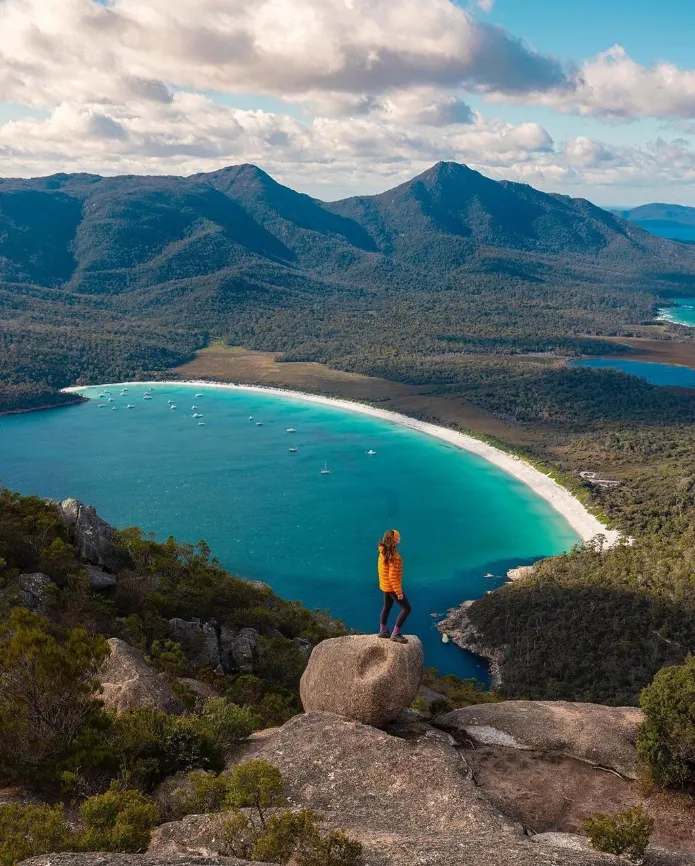
Wineglass Bay gets most of the attention, but don’t spend your entire Freycinet visit chasing one famous photograph. The Hazards, granite headlands, blue-green bays and smaller beaches are what make the whole peninsula special.
Even some shorter walks involve steep or loose surfaces, so proper footwear is worth bringing.
Bay of Fires
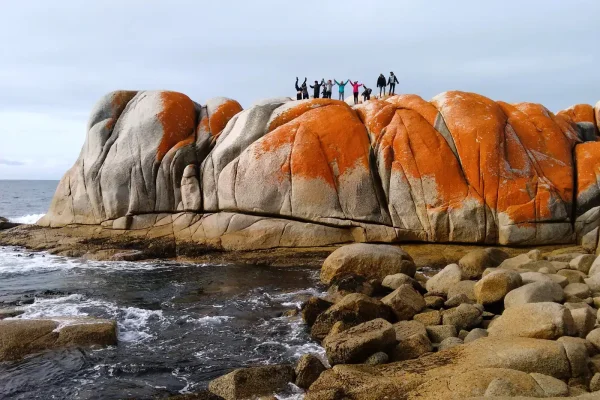
If you imagined a Tasmanian beach as dark, cold and windswept, the Bay of Fires might surprise you.
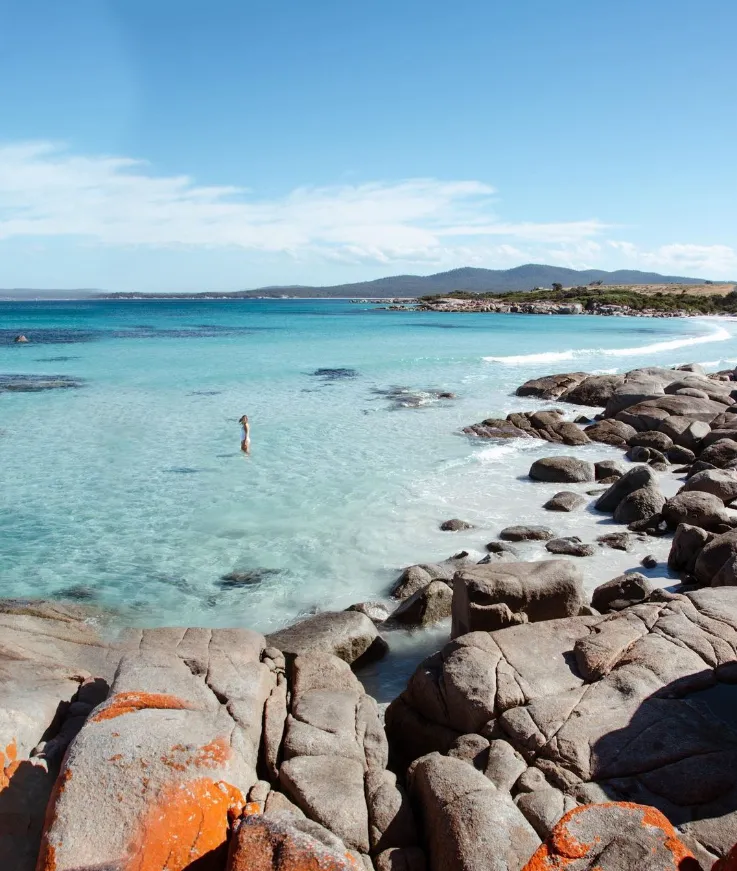
Brilliant white sand, clear turquoise water and enormous granite boulders splashed with fiery orange lichen define this stretch of north-east coastline. Put those colours together on a sunny day and parts of the coast can look almost tropical.
Don’t think of the Bay of Fires as one attraction with one viewpoint. Explore several sections of coastline, walk the beaches, swim when conditions are suitable or find a quiet patch of sand and stay awhile.
St Helens makes a practical base for exploring the area without rushing.
Tulip Farm
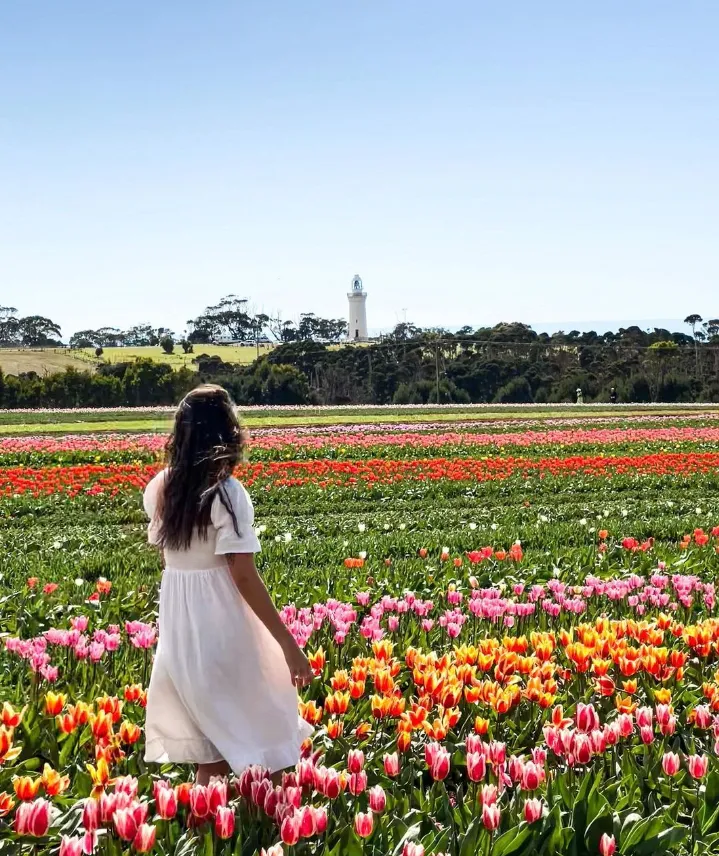
Spring brings a completely different colour palette to Tasmania.
At Table Cape Tulip Farm near Wynyard, long stripes of red, yellow, pink, orange, white and purple flowers spread across the rich farmland of Tasmania’s north-west.
For 2026, the tulip season is scheduled to begin on 26 September and continue until late October, subject to flowering conditions. The strongest displays are normally around early to mid-October.
A difference of several weeks can completely change what you see here, so check the flowering update before making a long detour.
The Cradle Mountain National Park is a notable location
If one landscape captures Tasmania’s wilderness in a single view, Cradle Mountain-Lake St Clair National Park is probably it.
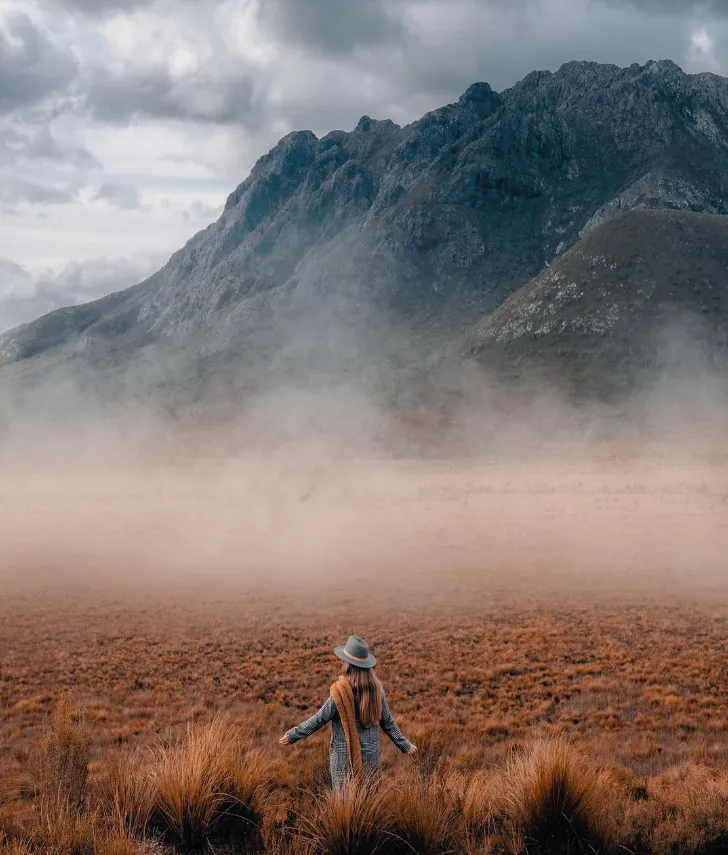
Cradle Mountain rises behind dark alpine lakes, button-grass plains and forests that can disappear into mist without much warning. On a clear morning, Dove Lake can be almost mirror-like; a few hours later, cloud may wrap itself around the peaks.
You don’t need to be a serious bushwalker to experience it. Short walks and viewpoints are available around the Cradle Mountain area, while experienced hikers can tackle much more demanding alpine routes.
For the full wilderness experience, the famous Overland Track runs for approximately 65 kilometres and is generally completed over six days.
Whatever walk you choose, respect the weather. Conditions in Tasmania’s high country can change remarkably quickly.
The Museum of Old and New Art (MONA) is renowned
After days of mountains, beaches and forests, MONA offers something completely different.
Much of the museum is buried underground at Berriedale outside central Hobart. You descend into a maze of dark spaces filled with ancient, modern and contemporary works that can be beautiful, strange, funny, uncomfortable or deliberately provocative.
That’s exactly why MONA works. You don’t need to know much about art before visiting, and you’re unlikely to agree with everything you see.
As of September 2026, MONA operates from Thursday to Monday, 10 am to 5 pm. Taking the ferry from Hobart adds another layer to the experience, with the museum gradually appearing as you travel along the Derwent.
Climbing the Nut
Approaching Stanley, the first thing you’ll notice is the enormous flat-topped volcanic formation rising above the town.
That’s The Nut, standing approximately 143 metres above the surrounding coastline.
The walk up is short but seriously steep. Once you’ve reached the plateau, however, the 2.7-kilometre Nut Summit Circuit is much gentler and opens up broad views across Stanley’s rooftops, green farmland and the blue-grey waters of Bass Strait.
If the climb doesn’t appeal, a chairlift provides another route to the top when operating.
Don’t immediately leave afterwards. Stanley itself is one of the most attractive small towns on Tasmania’s north-west coast.
Consider visiting King Island, located off the coast of Tasmania
Out in Bass Strait, King Island feels like Tasmania stripped back even further.
Windswept beaches, rugged coastal cliffs, green farmland, celebrated local produce and golf courses sitting directly beside the ocean define much of the island.
You reach King Island by air, and having a hire car makes exploring considerably easier. Because flights, vehicles and accommodation are limited compared with mainland Tasmania, this isn’t somewhere I’d leave to last-minute planning.
Give the island several days if you can. The reward is a slower, quieter version of Tasmania, where the coastline often feels as if it belongs entirely to you.
Take a trip to the Tessellated Pavement
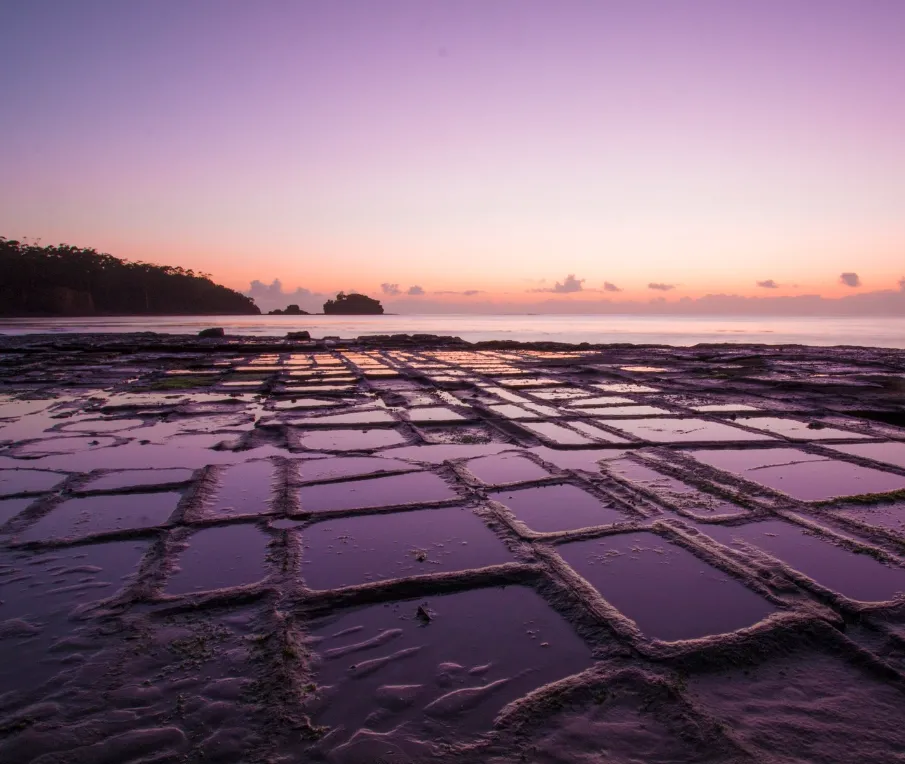
At Eaglehawk Neck, the coastline has created something that looks almost too geometrically perfect to be natural.
The Tessellated Pavement is a broad rock platform broken into remarkably regular rectangular sections. From above, parts of it resemble giant paving stones laid across the shore.
The patterns formed naturally through fractures and erosion rather than human construction.
It’s an easy stop to combine with Port Arthur and the Tasman Peninsula’s other geological features. Give yourself time to explore rather than jumping out for a photograph and immediately getting back into the car.
Check out Charlie's Dessert Restaurant
Not every Tasmanian adventure needs hiking boots.
After a day exploring Launceston, Charlie’s Dessert House offers a decidedly sweeter finish. Think indulgent desserts rather than another scenic lookout — particularly appealing after walking around Cataract Gorge.
I’d combine it with an evening in Launceston rather than travelling across Tasmania purely for dessert.
Menus and opening hours can change, so check the current details before planning your night around it.
Discover the unparalleled charm of Satellite Island
Just off southern Tasmania in the D’Entrecasteaux Channel, Satellite Island offers the sort of isolation that’s increasingly difficult to find.
This isn’t a conventional tourist attraction. It’s a private island accommodation experience where the coastline, rocks, water and sense of seclusion are the attraction.
Rather than ticking off viewpoints, you can spend your time walking beside the water, watching the weather move across the channel and enjoying the rare feeling of having an entire island around you. That’s what makes it special.
Availability and transfer arrangements should always be confirmed before including them in your itinerary.
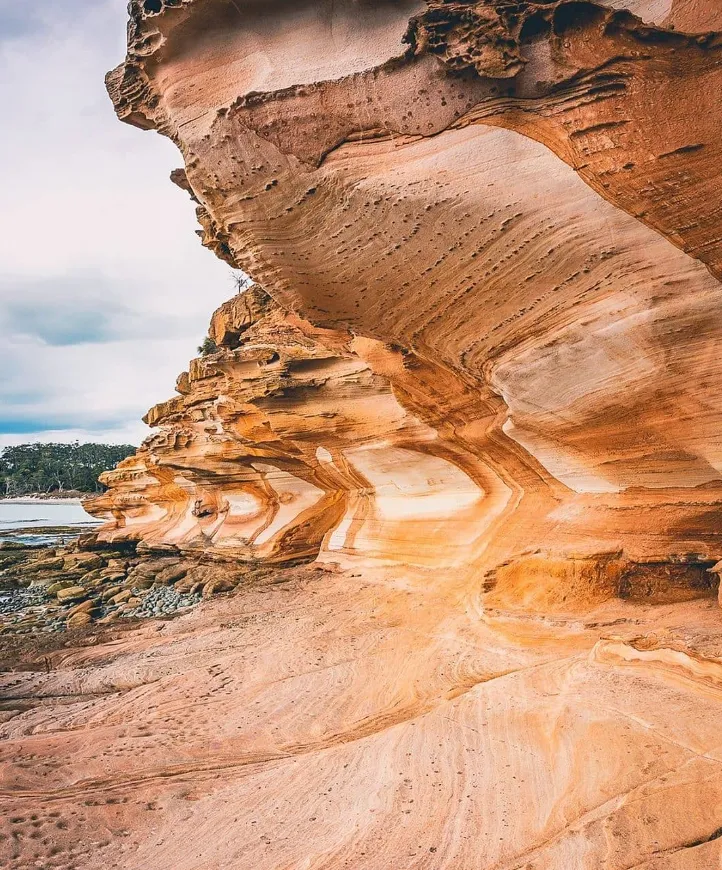
Feel free to explore the Painted Cliffs on Maria Island
The Painted Cliffs look as though somebody has taken a brush to the sandstone.
Bands and swirls of yellow, orange, red and cream curve through the rock beside the water, created by minerals moving through the sandstone and the continuing effects of coastal erosion.
From Darlington, it’s approximately a 4.3-kilometre return walk, generally taking 1–2 hours.
There’s an important catch: access around the rock platform is best within roughly two hours of low tide and when sea conditions are calm.
Maria Island itself is reached by passenger ferry from Triabunna, and visitors don’t bring their cars across. That only adds to the feeling that you’ve stepped away from mainland Tasmania for the day.
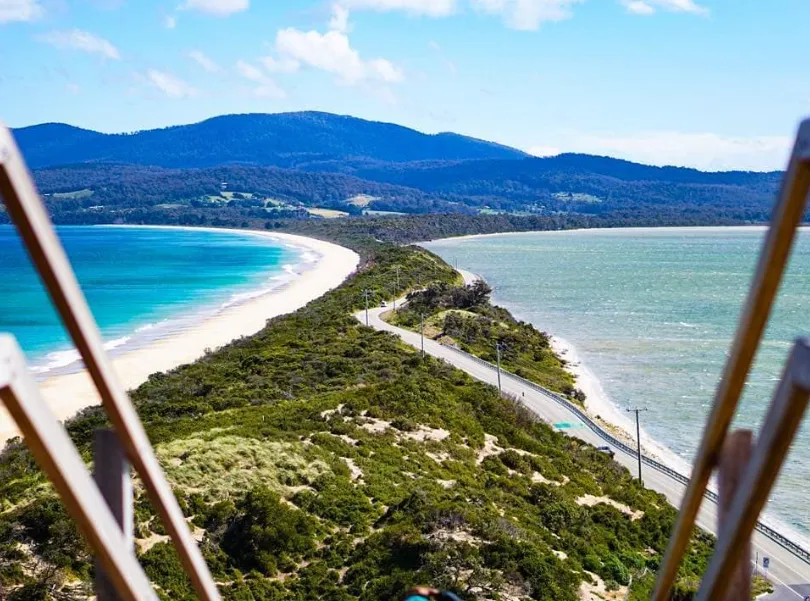
Ascend to the peak of "The Neck" on Bruny Island
Few viewpoints explain the geography of a place as clearly as The Neck.
Climb to the lookout,t and you’ll see a narrow ribbon of land stretching away beneath you, with water on both sides and the hills of Bruny Island rising beyond.
It’s the classic Bruny photograph, but the island deserves much more than a quick lookout stop.
Continue south for beaches, coastal scenery, walking tracks and local produce. Bruny works best when you give it most of a day — or stay overnight — rather than racing from the ferry to The Neck and straight back again.
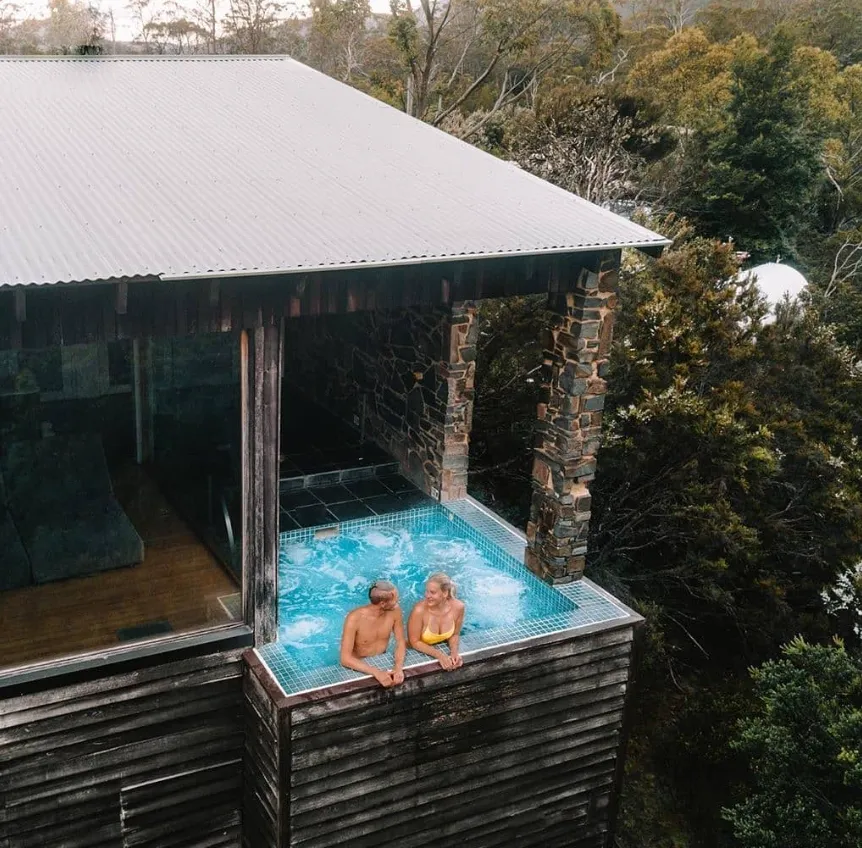
Discover the distinctive Floating Sauna in Derby
Imagine spending the morning flying along forest mountain-bike trails and finishing the day inside a hot timber sauna floating on a cold Tasmanian lake.
That’s Derby.
The Floating Sauna Lake Derby sits directly on the water and accommodates up to five people. The contrast makes the experience: warm timber and steam inside, cool forest air and dark lake water immediately outside.
You don’t have to be a mountain biker to enjoy it, but pairing the sauna with the Blue Derby trails makes for one of the most distinctive active days you can have in north-east Tasmania.
Delve into the Tamar Valley Wine Region
North of Launceston, the landscape opens into vineyards, farmland and the broad waters of the Tamar River.
The Tamar Valley Wine Route stretches for around 170 kilometres, linking cellar doors across one of Australia’s important cool-climate wine regions.
Pinot noir, sparkling wine, chardonnay and aromatic whites are among the varieties you’ll encounter, but the pleasure here isn’t simply tasting wine. The drive is part of it — rolling countryside, river views and small cellar doors where you can slow down for an afternoon.
Opening days vary between wineries, and some cellar doors require appointments, so choose several stops before setting out rather than assuming everything will be open.
Kindly check in at the specified boutique hotel
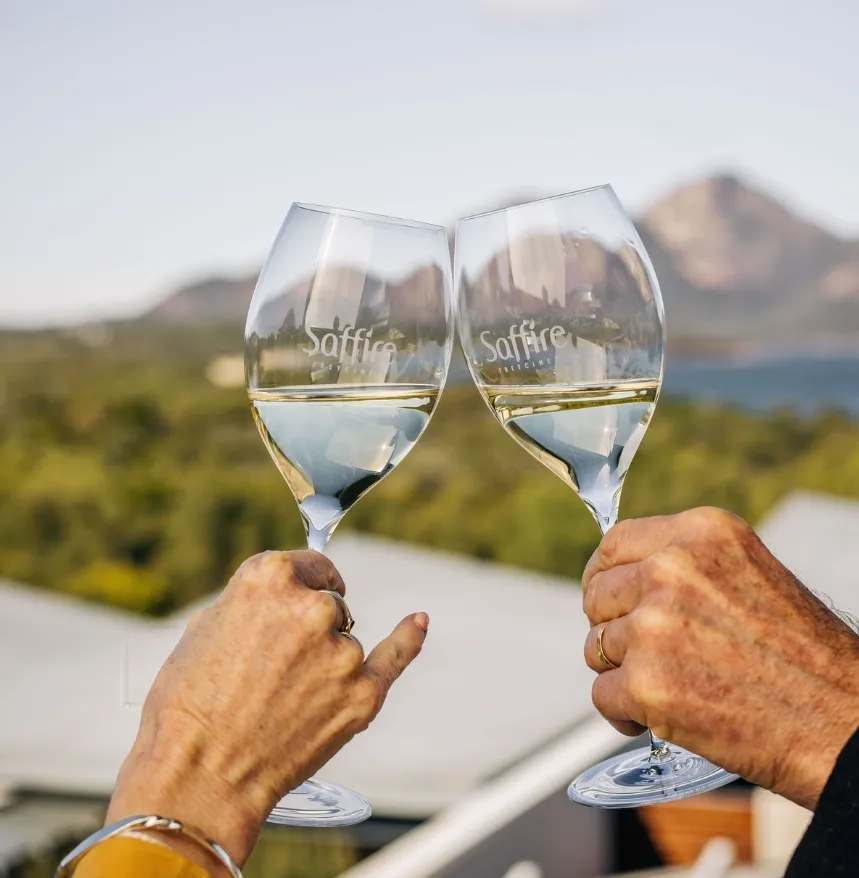
If you’re going to splurge on accommodation somewhere in Tasmania, Saffire Freycinet certainly knows how to make the most of its location.
The lodge sits beside Freycinet National Park with The Hazards dominating the landscape beyond.
Instead of leaving the scenery behind when you finish exploring for the day, the mountains and coastal environment remain part of where you’re staying. That changes the experience completely.
It’s firmly at the premium end of Tasmanian accommodation, so check current rates and inclusions directly. But if Freycinet is the centrepiece of your trip, the location is difficult to beat.
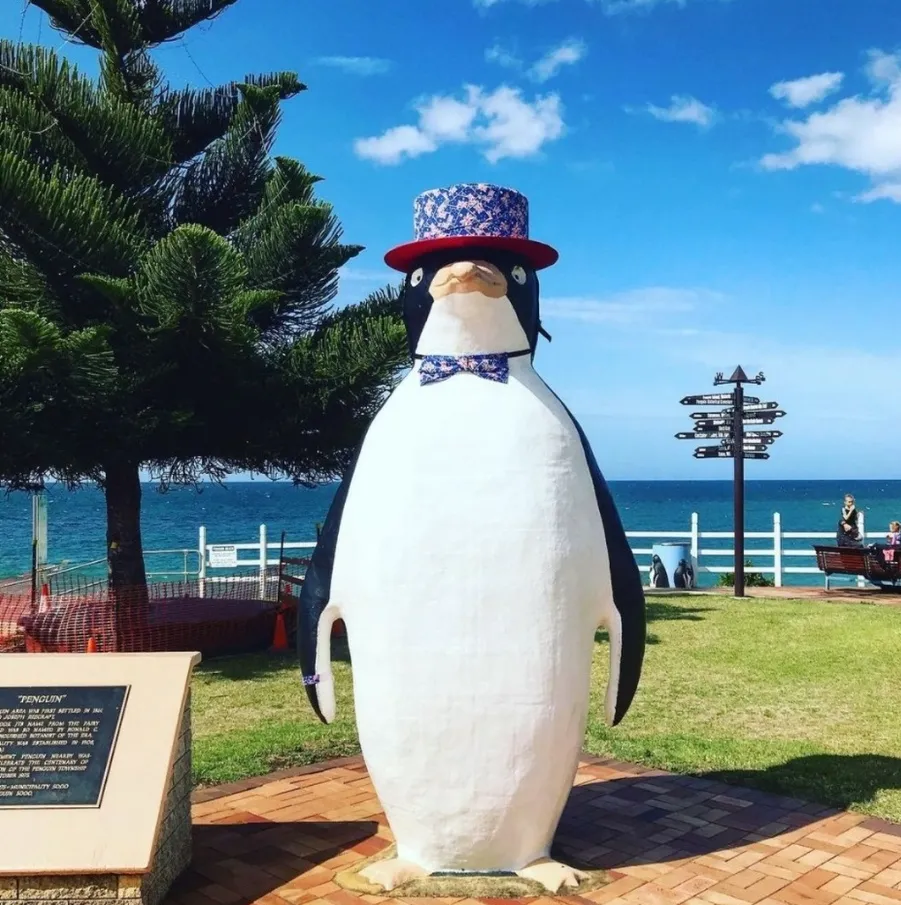
Explore the town named Penguin
Yes, there really is a Tasmanian town called Penguin — and yes, there’s a giant penguin waiting on the foreshore.
Sitting between Burnie and Ulverstone on the north-west coast, Penguin is an easy place to break up a road trip. The Big Penguin provides the obvious photo, but the waterfront and relaxed coastal setting make the town worth more than a five-minute novelty stop.
It’s particularly easy to include if you’re travelling towards Table Cape, Stanley or Cradle Mountain.
Sometimes Tasmania’s smaller places are memorable precisely because you weren’t expecting much from them.
Admire Natureat the Tasman Arch
Tasmania’s south-east coast becomes much more dramatic around the Tasman Peninsula, and Tasman Arch is a perfect example.
The ocean has carved an enormous opening through the rock here, leaving a natural arch framed by steep coastal cliffs.
Its scale is difficult to appreciate until you’re standing near it. Combine Tasman Arch with Devil’s Kitchen, the Tessellated Pavement, and other coastal formations around Eaglehawk Neck rather than making a separate trip for each.
Access the Wilderness by Railway
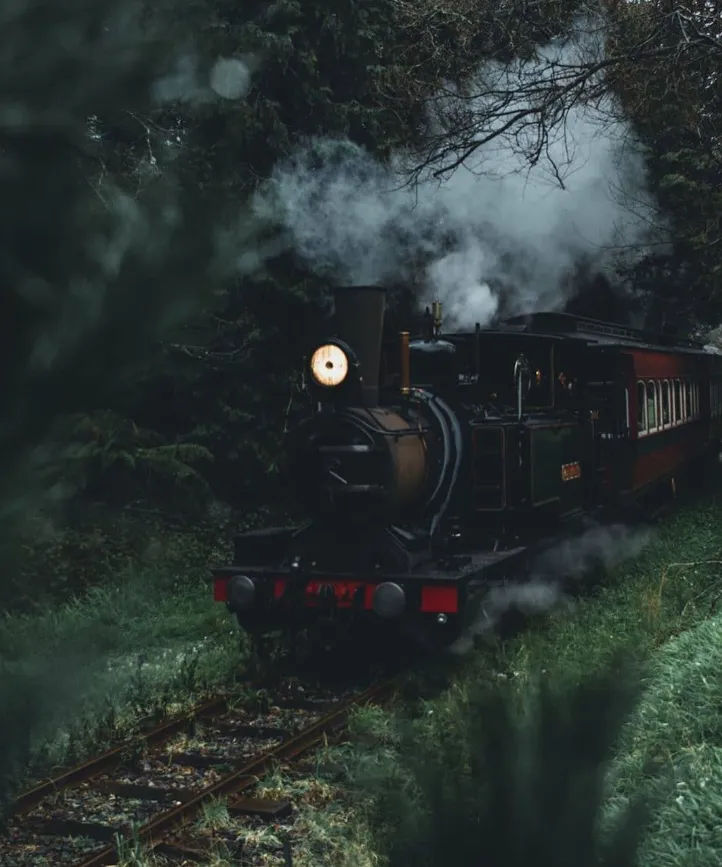
On Tasmania’s west coast, even the railway has to fight its way through the landscape.
The West Coast Wilderness Railway follows more than 34 kilometres of historic track through rainforest, river valleys and steep terrain around Queenstown and Strahan.
The scenery alone is impressive, but the engineering makes the journey even more interesting. The railway uses the Abt rack-and-pinion system, originally required to move trains across gradients too steep for conventional adhesion alone.
On wet or misty days, cloud hanging between the trees and mountains can make the rainforest particularly atmospheric.
It’s one of the rare occasions when getting somewhere slowly is the whole point.
You can book a stay at the Pumphouse Point Hotel
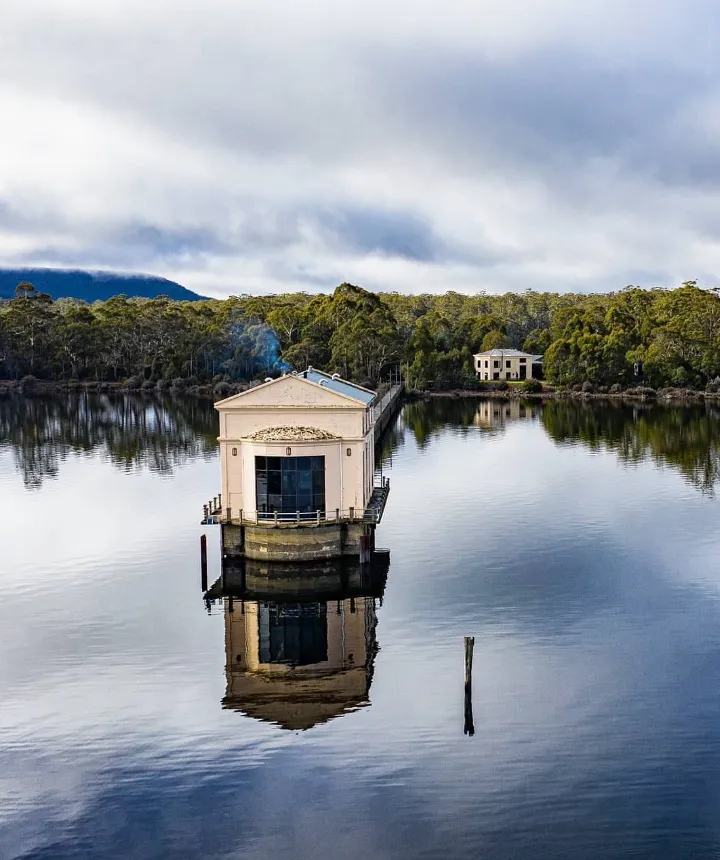
Imagine waking up with Lake St Clair immediately outside your window and wilderness stretching far beyond it.
That’s the appeal of Pumphouse Point.
The property occupies a remarkable position on Australia’s deepest freshwater lake, inside the wider landscape of Cradle Mountain-Lake St Clair National Park.
Don’t treat it simply as an overnight stop between destinations. Stay long enough to walk along the lake, experience the changing weather, and see how different the landscape becomes in the evening and early morning.
Here, the location is the luxury.
Visit Franklin-Gordon Wild Rivers National Park
Western Tasmania doesn’t ease you gently into wilderness.
The Franklin-Gordon Wild Rivers National Park is a landscape of deep river valleys, dense temperate rainforest, mountains, and vast areas where human development is almost nonexistent
It’s part of the Tasmanian Wilderness World Heritage Area, and even driving the Lyell Highway through the region gives you a taste of its scale.
Stop whenever conditions and access allow. Short walks and viewpoints give you time to hear the forest, feel the moisture in the air and appreciate how different western Tasmania is from the drier east coast.
This is one section of Tasmania where rushing from A to B feels particularly wasteful.
Tee off at a breathtaking golf course
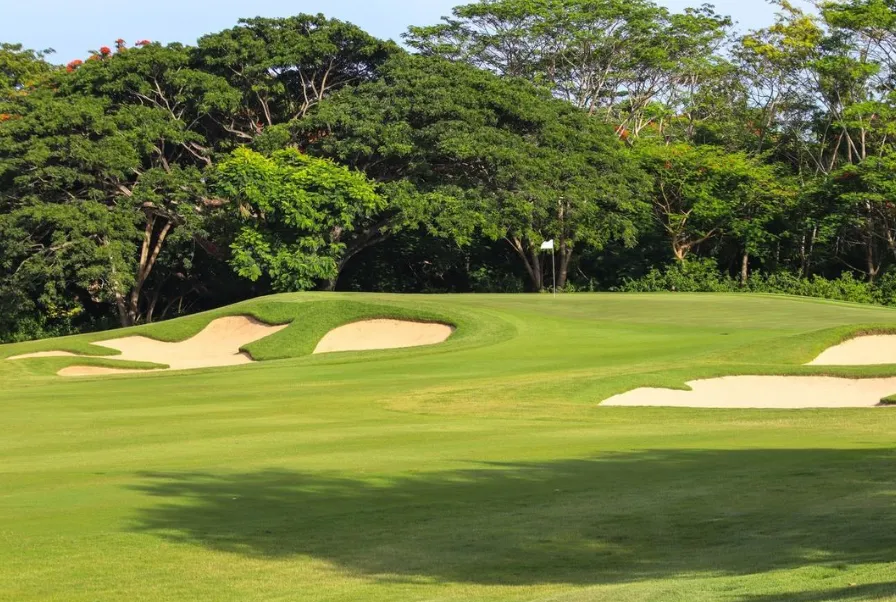
Tasmania has somehow managed to turn golf into sightseeing.
At Barnbougle, the fairways run through dunes beside the wild north-east coast, with Bass Strait winds becoming part of the challenge.
On King Island, Cape Wickham and Ocean Dunes occupy equally dramatic coastal landscapes. Cape Wickham is an 18-hole course where the ocean is rarely far from view.
Even if golf normally isn’t the reason you travel, it’s easy to understand why players cross Australia — and considerably farther — to experience these courses.
Few places make a missed shot look quite this scenic.
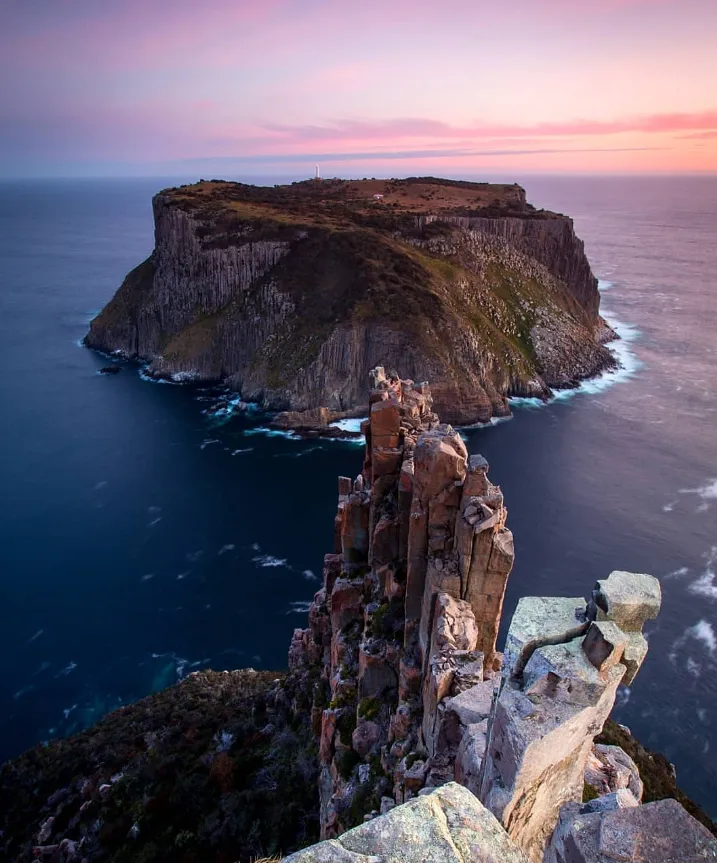
The Three Capes Trek is a sought-after hiking route
The Three Capes Track takes you into some of the most dramatic coastal country in Tasmania.
The complete walk covers 48 kilometres over four days and three nights, following the Tasman Peninsula through forest and high above enormous sea cliffs.
It begins at Port Arthur and includes a boat journey to the walking route, while purpose-built overnight cabins remove the need to carry a tent.
Don’t mistake that infrastructure for an easy sightseeing stroll. You’re still walking for four days through exposed coastal country where conditions matter.
Give the track its own space in your itinerary rather than squeezing it between Port Arthur and another destination.
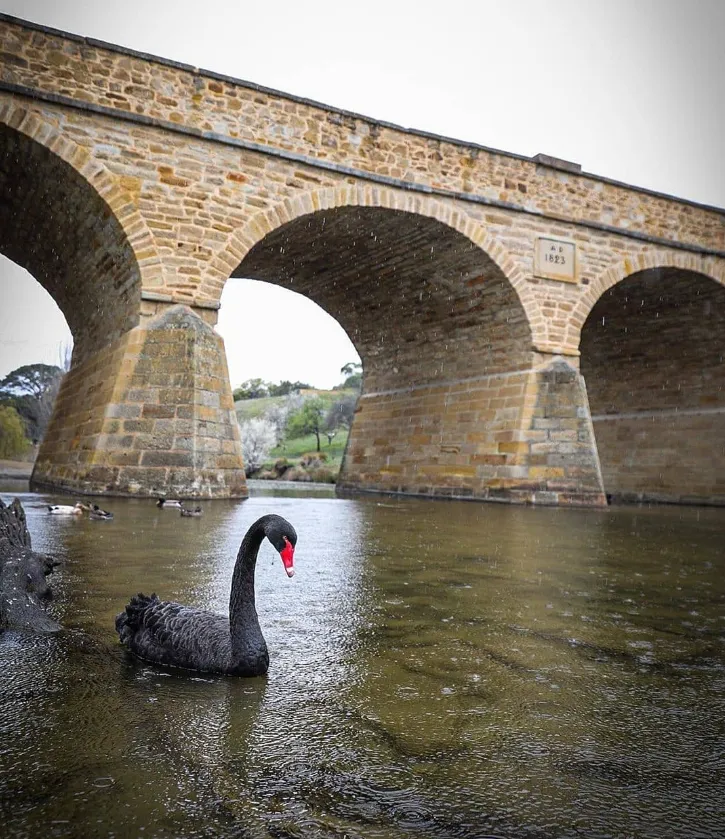
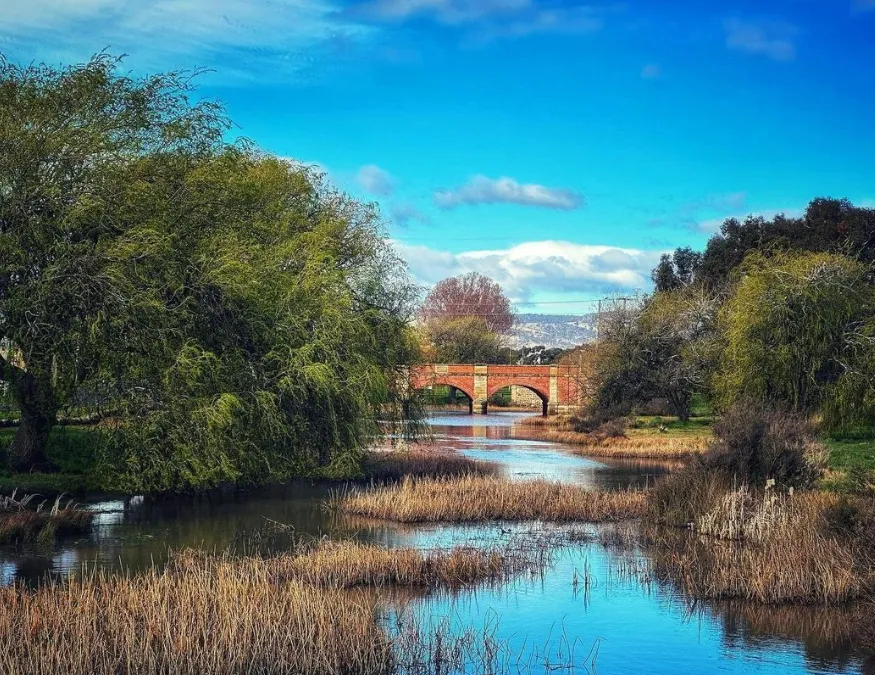
Tour Australia's most ancient bridge in Richmond
The sandstone arches of Richmond Bridge have been carrying traffic across the Coal River for roughly two centuries.
Construction began in 1823, and the bridge was completed in 1825 using convict labour. Today it remains Australia’s oldest surviving large stone arch bridge.
Walk down beside the river rather than simply driving across. From below, you can properly appreciate the stone arches and the quiet historic setting around them.
Spend some time in Richmond itself, too. Its old buildings and compact streets make an excellent change of pace between Hobart’s city attractions and Tasmania’s bigger wilderness destinations.
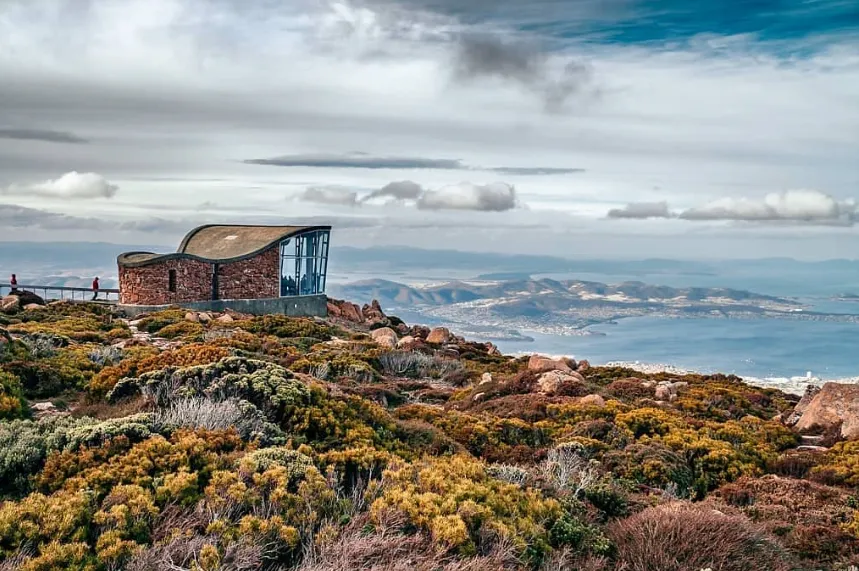
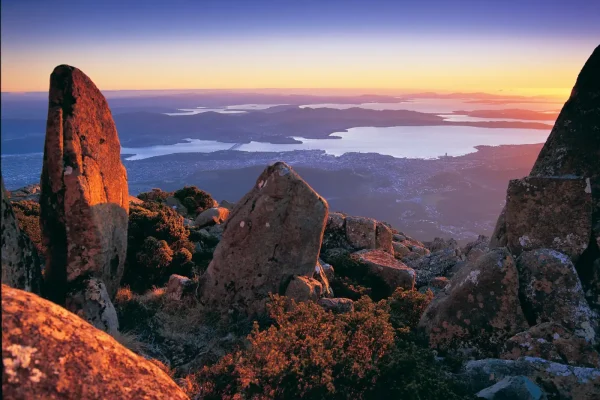
Ascend to the peak of Mount Wellington
You can be wandering Hobart’s waterfront and, not long afterwards, standing 1,271 metres above sea level looking down across the entire city.
That’s what makes kunanyi / Mount Wellington such an essential Hobart experience.
On a clear day, the view stretches across the River Derwent, the city, the surrounding hills, and far into southern Tasmania. When cloud rolls in, the same summit can become cold, grey and almost completely hidden. That’s part of the experience too.
Don’t dress for central Hobart and assume the summit will feel the same. Temperatures can be considerably lower, and the mountain is much more exposed to wind.
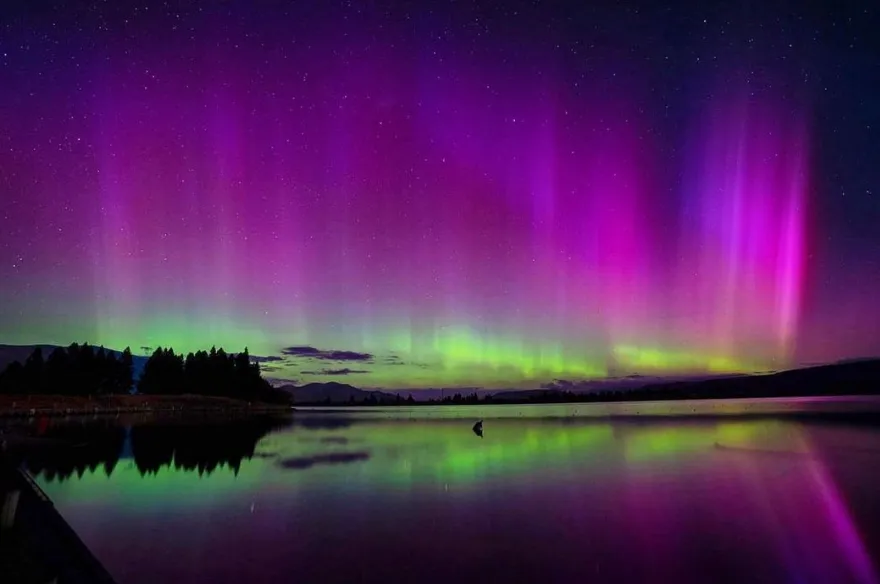
Witness the Southern Aurora Australis
Few Tasmanian experiences require as much luck as seeing the Aurora Australis.
When conditions align, the southern sky can glow green, pink, red or purple. Sometimes the colour is subtle to the naked eye and much stronger through a camera; on exceptional nights, the display can be unmistakable.
Tasmania’s southerly position makes it one of Australia’s best places to see the Southern Lights, particularly from dark locations with a clear view to the south.
Winter brings longer hours of darkness, but auroras can occur at other times of year.
Don’t plan your holiday around a guaranteed sighting. There isn’t one — and that’s exactly why seeing it feels so special.
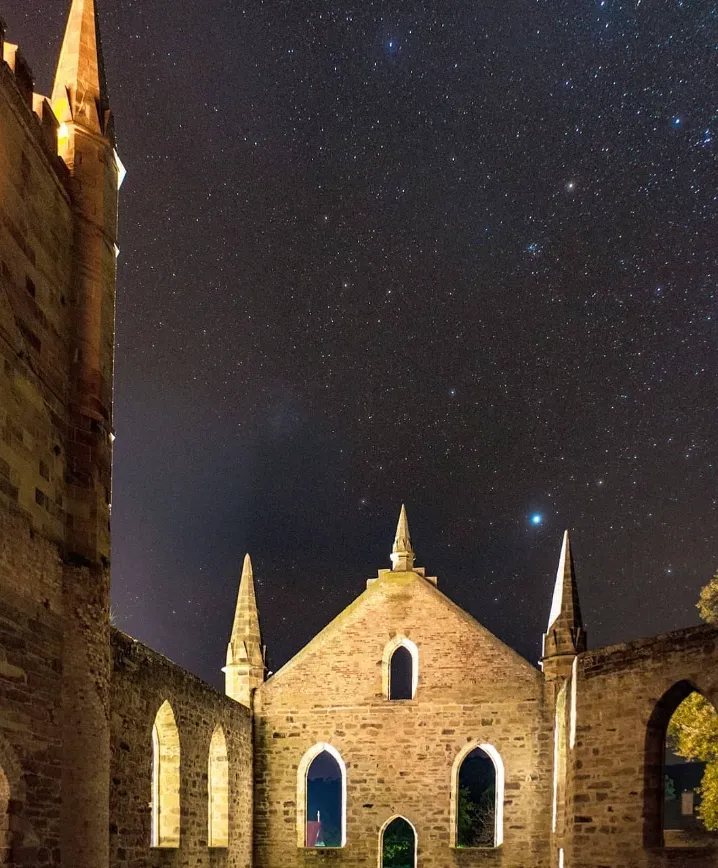
Participate in a Ghost Tour at Port Arthur
Port Arthur is atmospheric enough during daylight. After dark, it becomes something else entirely.
The Port Arthur Ghost Tour takes you through the historic site by lantern light as guides share stories and accounts of the former convict settlement.
The experience lasts around 90 minutes and covers approximately 2 kilometres on foot.
Rather than relying on somebody jumping out from behind an old wall, much of the atmosphere comes from the darkness, historic buildings and the knowledge of what happened at Port Arthur.
Bring appropriate clothing and footwear — Tasmanian evenings can become cold quickly.
Explore the Northern Midlands
It’s tempting to treat the road between Hobart and Launceston as a transfer.
Don’t.
Tasmania’s Northern Midlands are filled with historic towns, old bridges, sandstone buildings, farmland and villages that reward a slower journey.
Ross, Campbell Town, Evandale and Longford are among the places worth leaving the highway for.
There isn’t one enormous natural attraction driving the experience here. Instead, the appeal builds gradually through heritage streets, open countryside and the feeling of moving through a much older rural landscape.
Give yourself permission to stop somewhere that wasn’t originally on your itinerary.
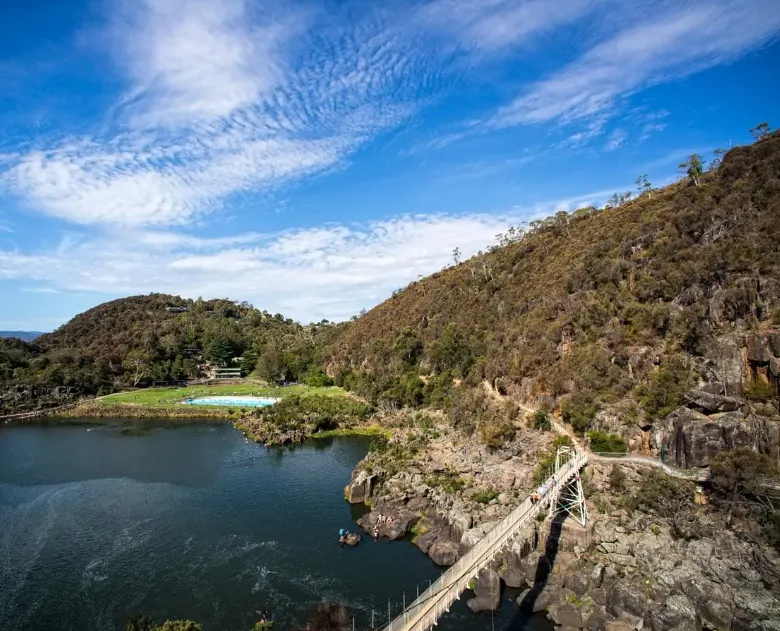
Explore Launceston's Cataract Gorge
Only minutes from central Launceston, the city suddenly seems to fall away.
At Cataract Gorge, rocky cliffs close around the South Esk River while walking tracks weave through bushland remarkably close to the CBD.
You can make this a short sightseeing stop, but I’d walk farther. Trails extend through the reserve and towards Duck Reach, giving you a much better feel for the gorge than you’ll get from one viewpoint.
That’s one of Launceston’s biggest advantages: you can have breakfast in the city, spend several hours walking beside cliffs and river, and be back in town without sacrificing an entire day.
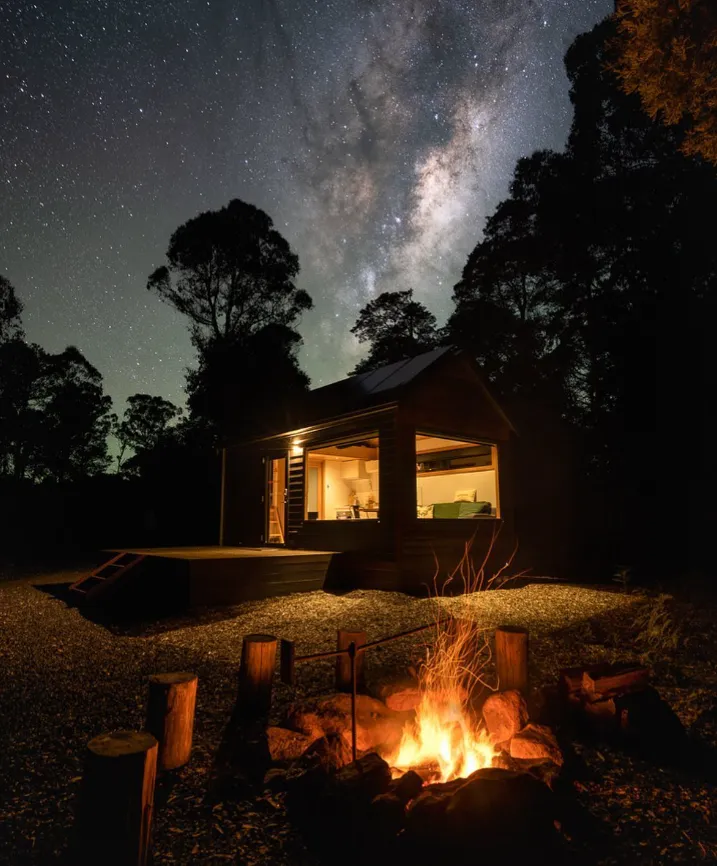
Please check in to Captain's Rest Cabin
Some places seem almost designed for a rainy Tasmanian afternoon.
Captain’s Rest is one of them.
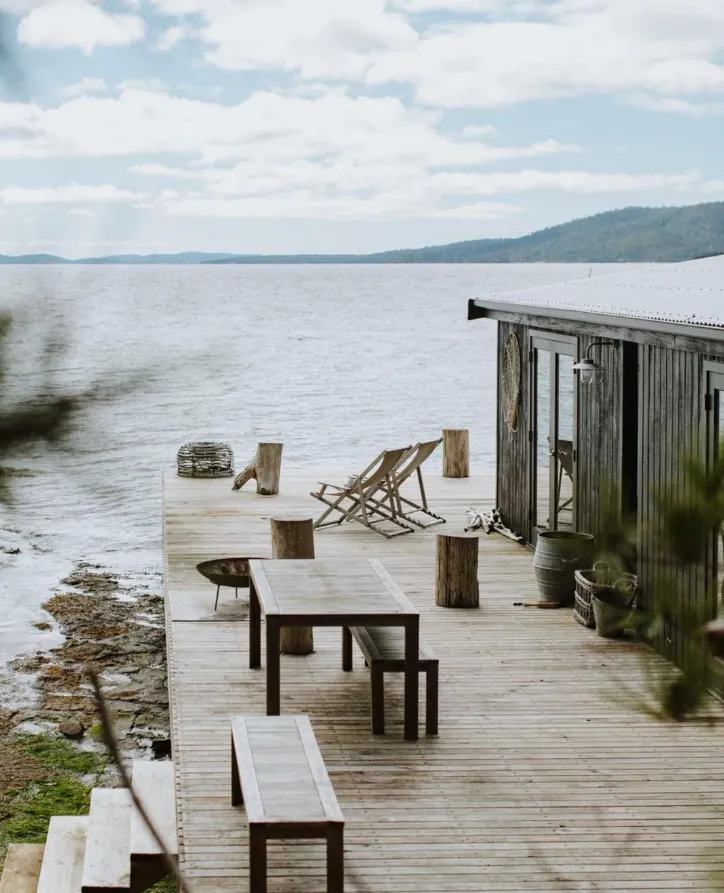
The small waterfront cabin on Tasmania’s west coast became famous for its intimate, carefully styled interior and the view straight across the water.
The real attraction, though, is the atmosphere outside — mist, mountains, reflections and the slower rhythm of Tasmania’s west.
This is accommodation I’d actually build into the itinerary rather than use merely because you need somewhere to sleep. Book early if it’s important to you, because small distinctive properties naturally have far less availability than large hotels.
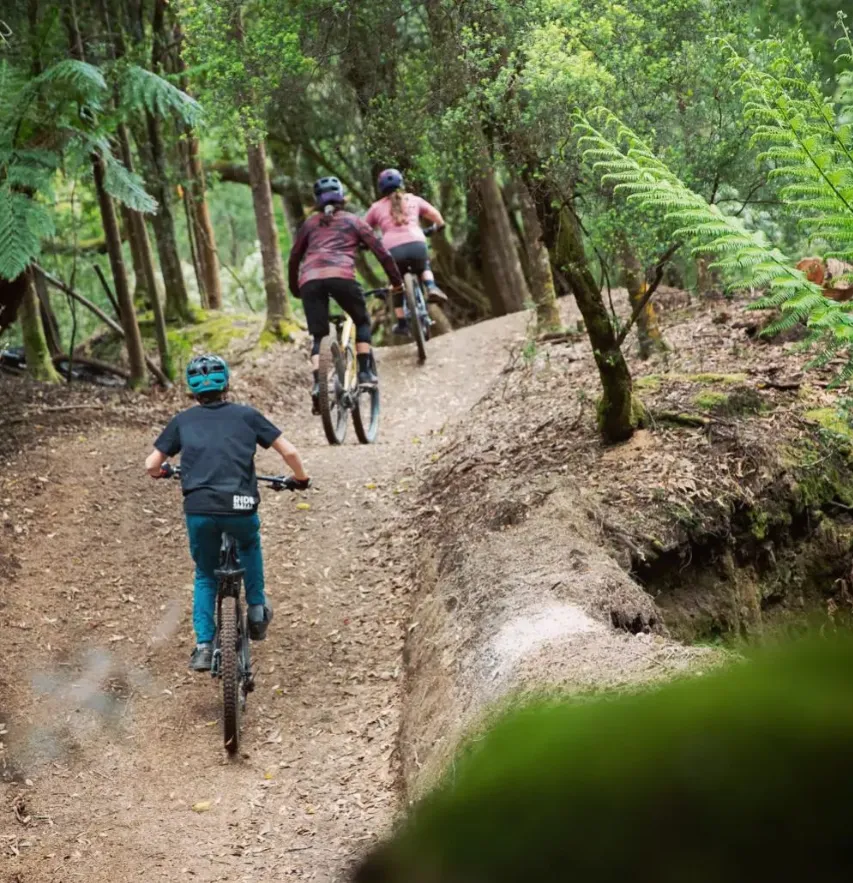
BlueDerby Mountain Bike Trails
A former mining town in north-east Tasmania has become one of Australia’s great mountain-biking destinations.
Blue Derby now offers more than 125 kilometres of purpose-built trails, winding through forest, granite terrain and the hills surrounding Derby.
There are options for riders of all skill levels, and experienced riders will find plenty of technical terrain, too.
Bike hire, shuttles and guided options are available locally, so you don’t necessarily need to bring your own bike across Bass Strait.
When your legs have had enough, that Floating Sauna waiting on Lake Derby starts looking particularly appealing.
Explore the offerings at the Salamanca Market
On Saturday morning, Hobart seems to gravitate towards Salamanca Place.
The Salamanca Market runs from 8:30 am to 3 pm and usually brings together around 300 stalls beneath the historic sandstone warehouses.
You’ll find Tasmanian produce, food, crafts, gifts and locally made products, but the atmosphere is as important as the shopping.
Don’t rush through in 30 minutes. Grab something to eat, browse the stalls, then continue towards Battery Point or Hobart’s waterfront.
If Salamanca Market is high on your list, make sure your Hobart stay actually includes a Saturday.
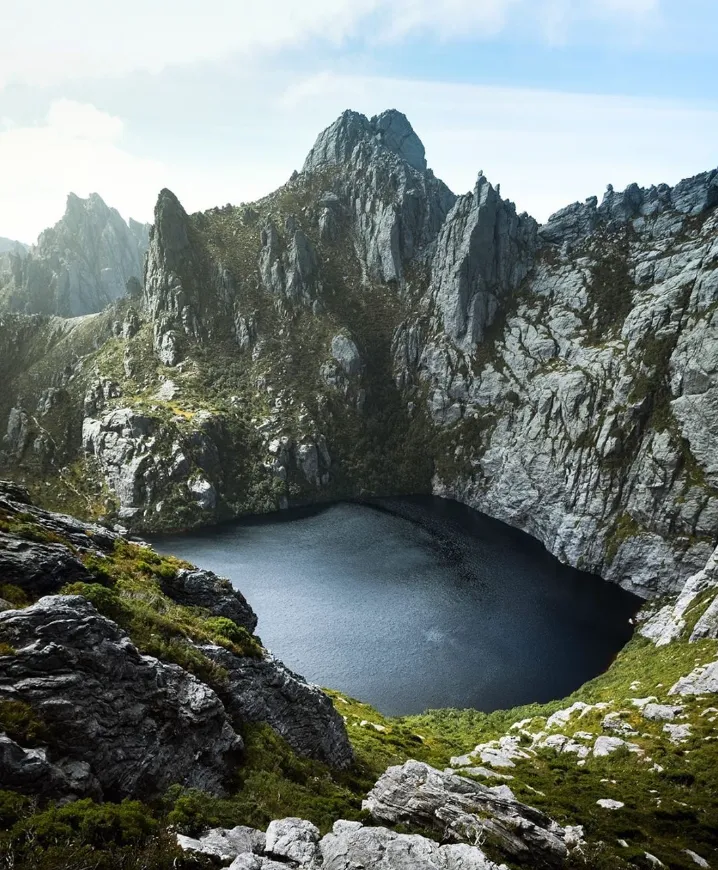
The Western Arthur Range provides vistas of Lake Oberon
Then there’s the wild end of the Tasmania walking spectrum.
The Western Arthur Range rises through Tasmania’s remote south-west in a dramatic chain of jagged peaks, high passes and alpine lakes.
Lake Oberon is one of its most spectacular sights, sitting beneath steep mountain walls in scenery that looks almost unreal.
Reaching it isn’t a casual day walk.
This is serious remote alpine terrain requiring navigation skills, suitable equipment, preparation and the ability to deal with rapidly changing weather. Mobile coverage is unreliable, and Tasmania Parks and Wildlife Service recommends carrying the appropriate 1:50,000 map.
The photographs are extraordinary. The landscape demands respect.
Experience the finest lodging in Tasmania
Tasmania does accommodation particularly well because some of its best places to stay don’t try to separate you from the landscape.
You can sleep beside Lake St Clair, hide away on a private island, stay in a tiny waterfront cabin on the west coast or wake beneath the pink granite peaks of Freycinet.
That’s the best way to think about accommodation here. Don’t automatically choose the place closest to the highway or the cheapest room between two attractions. Sometimes staying somewhere remarkable gives you an experience you’d otherwise never have.
FAQ
What are the best things to do in Tasmania?
How many days do you need for a trip to Tasmania?
What should first-time visitors not miss in Tasmania?
What are the best things to do in Tasmania in winter?
What are the best things to do in Tasmania with family?
Can you explore Tasmania without a car?
What is the best time of year to visit Tasmania?
Related Tours
- Departs / Arrives
- 7:30 am
- 5:30 pm
- Starts / Finishes
- Hobart
- Duration
- 6 Night / 5 Night
- Style
- Comfort
- 2165 AUD
- Departs / Arrives
- 7:30 am
- 5:30 pm
- Starts / Finishes
- Hobart
- Duration
- 10 Day / 9 Night
- Style
- Comfort
- 3275 AUD