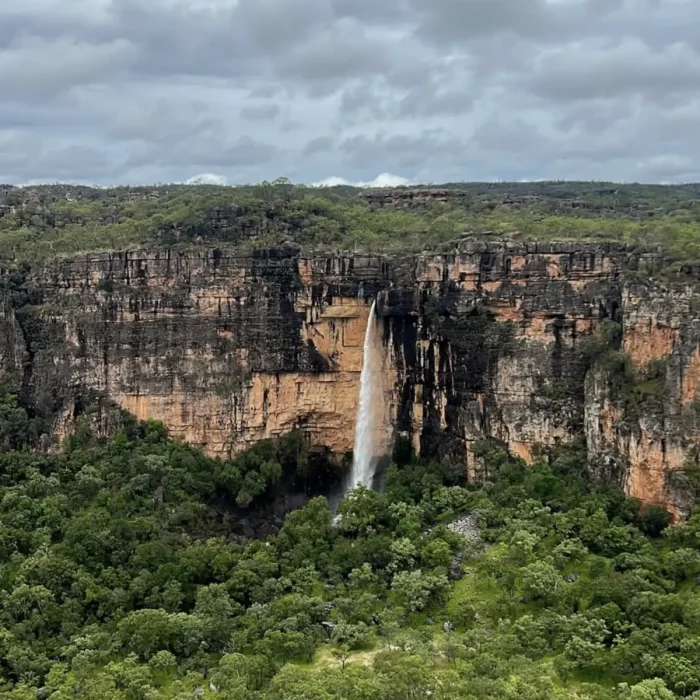
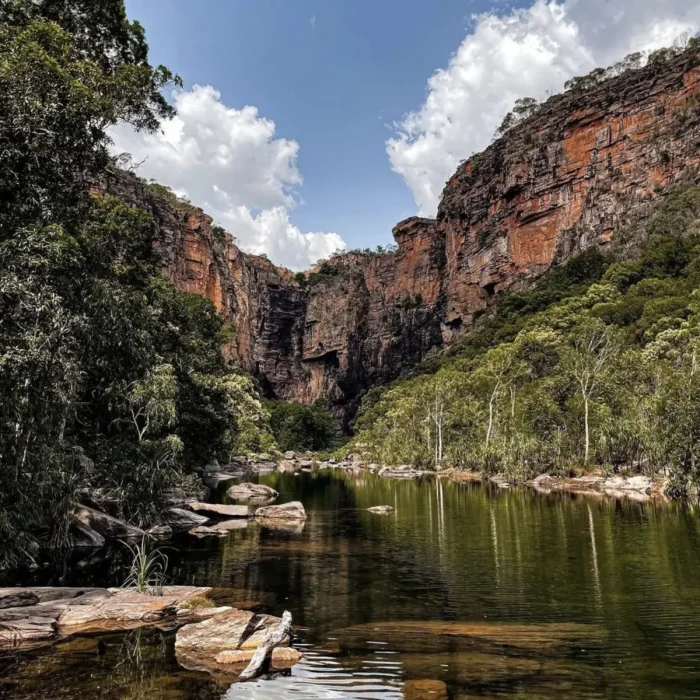
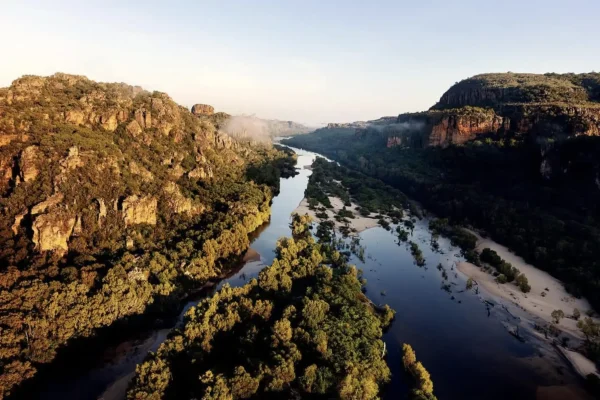
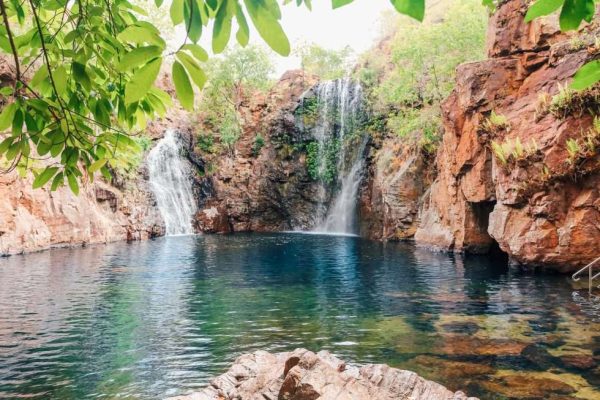
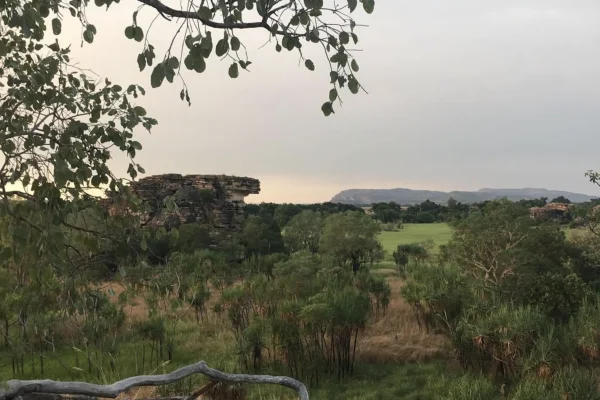
Jim Jim Falls is one of the most amazing waterfalls in Kakadu National Park, dropping over 150 metres high cliffs into a deep plunge pool. Located in the ancient gorge country of the Arnhem Land escarpment, this remote wonder is the ultimate destination for those looking for a great holiday in one of Australia’s most beautiful landscapes.
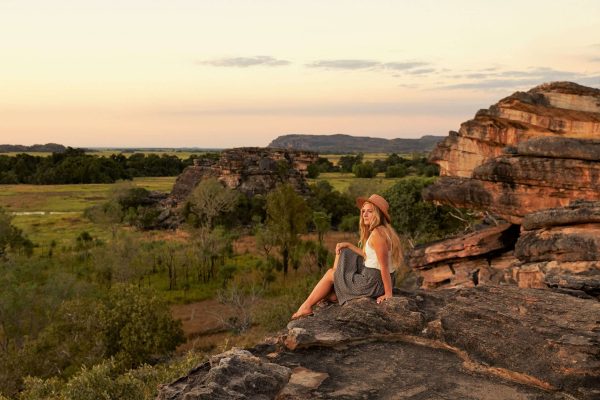
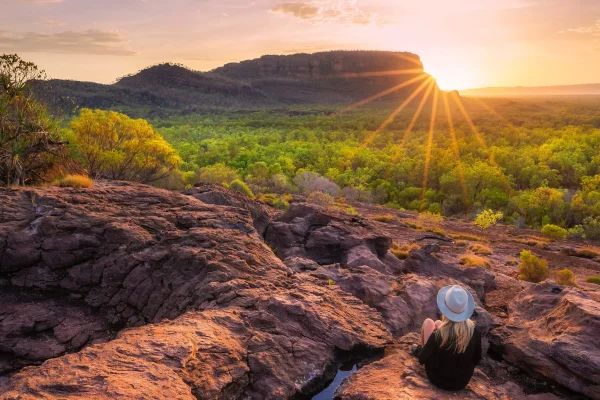
With breathtaking views, gorgeous gorges and plenty of water in the wet season, Jim Jim Falls is a true testament to the old land and the Gundjeihmi-speaking Aboriginal people who have lived here for thousands of years. For nature enthusiasts, landscape photographers and anyone looking to see Australia’s biggest waterfalls, this is a stunning spot not to be missed.
Table of Contents
Stories Through Time
The mighty Jim Jim Creek, which feeds Jim Jim Falls, is one of many escarpment creeks in Kakadu that have been carved out by centuries of water flow. Flowing through monsoon forests and over big boulders, the creek is part of the creation story told through Aboriginal rock art found throughout the region. These stories reveal the history through rock art, back to the beginning of time.
This old landscape has seen continuous water flow, with interconnected walking tracks following the routes used by Aboriginal ancestors. Visiting the falls is not only to see an incredible waterfall, but also to connect with the Aboriginal culture of the area.
How Did Jim Jim Creek Get Its Name?
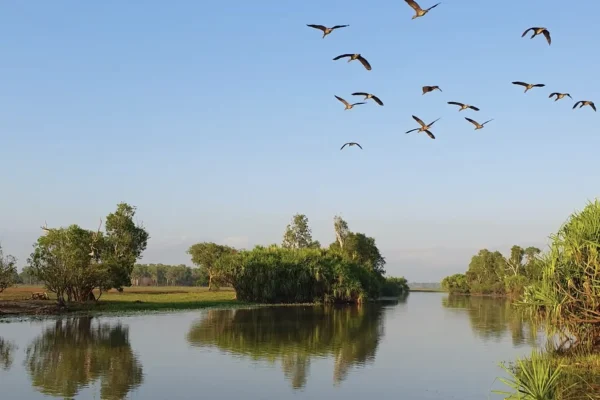
Jim Jim Creek gets its name from the Aboriginal word “Andjimdjim”, meaning water pandanus (Pandanus aquaticus) — a striking plant that lines the waterways in Kakadu. This greenery is a contrast to the red sandstone cliffs and is part of what makes Jim Jim so special.Over time, European settlers shortened and changed the name to “Jim Jim”, but the essence of the place remains rooted in Aboriginal knowledge and tradition.
A Must-See Wonder
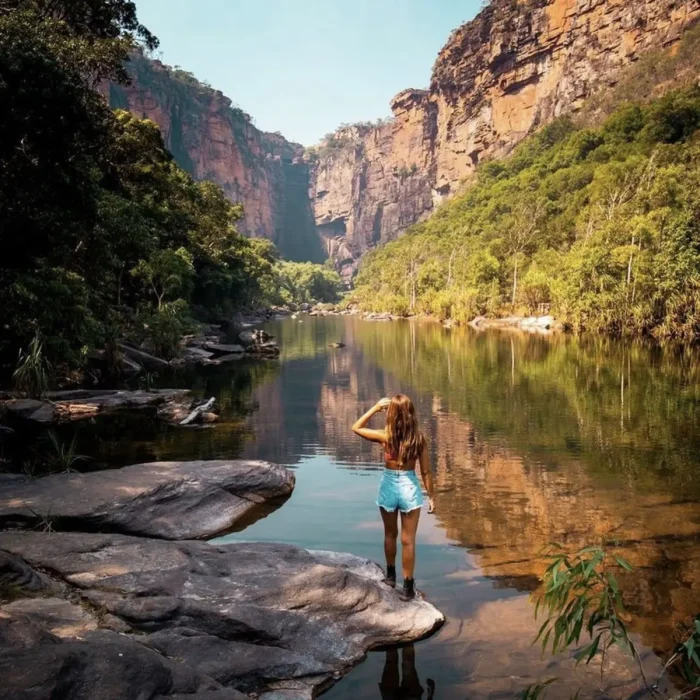
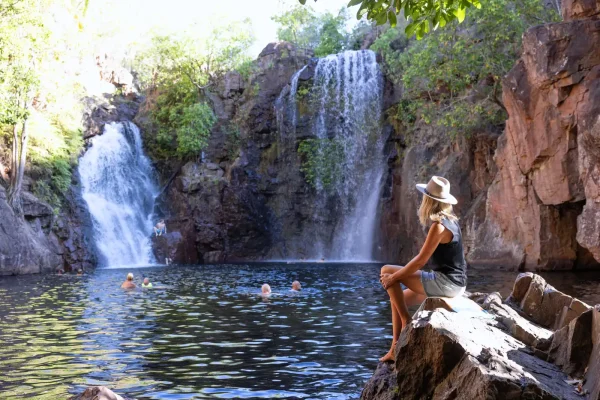
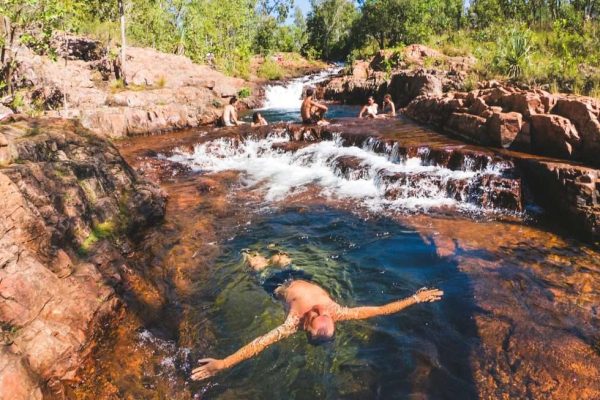
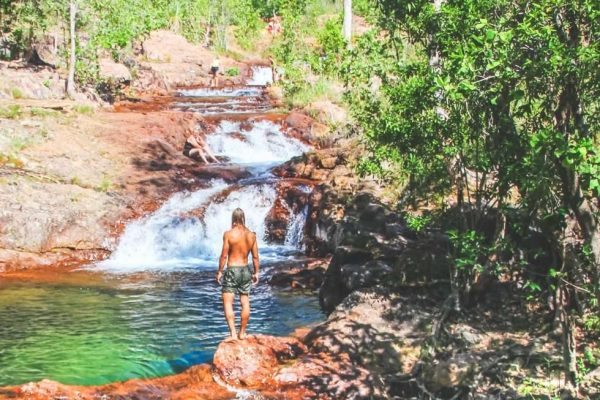
Jim Jim Falls is one of Australia’s biggest waterfalls. In the dry season the falls may stop flowing but the natural pool at the base is still accessible and perfect for a cool dip after the 2km return walk.
Highlights:
Walk through monsoon forests with big trees and birds
Cross narrow tracks and hike over boulders on the signposted track
Finish your walk at a plunge pool beneath 100m cliffs
Enjoy the peace and quiet of a site described as a mighty waterfall in an ancient gorge
The waterfall is seasonal but the presence of the waterfall — whether flowing or dry — is beautiful and the rock formations and breathtaking views make the whole walk worth it.
Directions & Access Tips
Access to Jim Jim Falls is via a corrugated gravel road off the Kakadu Hwy, south of Jabiru Township. You’ll need a high-clearance four-wheel drive for the last 50 km of four-wheel drive tracks, which include creek crossings, sand patches and rocky terrain.
Falls by road only in the dry season, with seasonal road openings depending on track conditions and water levels
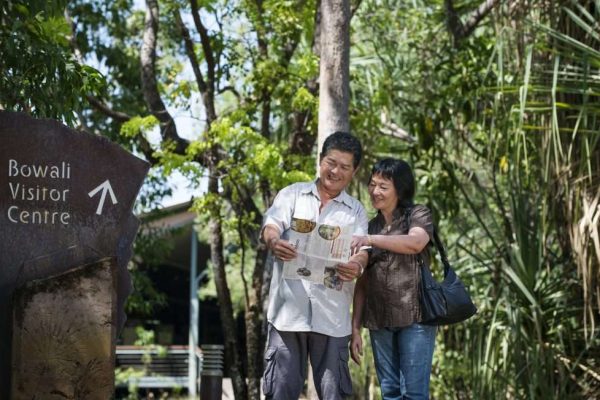
Check the road report at the Bowali Visitor Centre or with experienced guides before you go
The final approach is a hike along the Falls Gorge Walk, with degrees of difficulty from moderate to challenging depending on the season
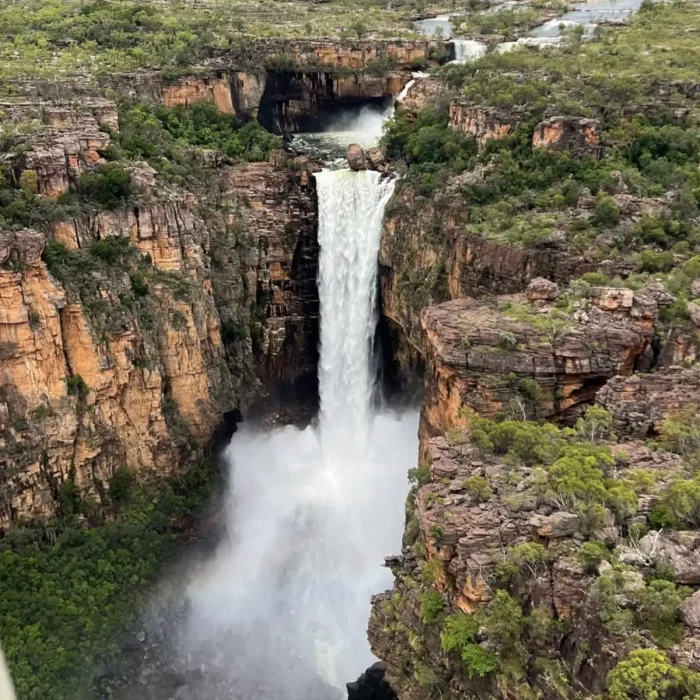
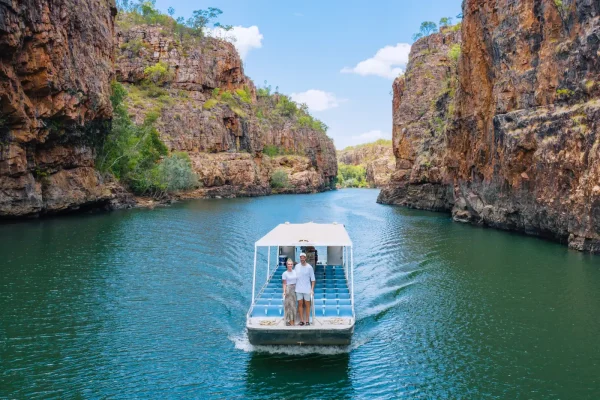
For an aerial view, Kakadu Air offers scenic flights over Jim Jim Falls, Twin Falls and other mighty waterfalls in Kakadu & Koopin.
Best Time to Visit Falls
The peak season is the dry season (May to October) when the gravel roads and hiking trails are open. This is the best time to swim in the natural plunge pool, walk the marked walking track and enjoy the fantastic views of the massive falls.
In the wet season, access is restricted but you can still see the falls from the air. Scenic flights in the wet season (November to April) will show you an incredible waterfall with an abundance of water as part of Kakadu’s formidable waterfalls.
You can’t access Jim Jim Falls by road in the wet season due to flooding and track closures, but you can see the massive waterfall on a Kakadu Air scenic flight.
Yes, a Kakadu National Park pass is required which includes access to Jim Jim Falls. Camping may require additional permits from the Bowali Visitor Centre.
Yes, you can join guided tours with experienced guides from Cooinda & Yellow WaterCooinda, Jabiru or other points along the Kakadu Highway. These tours often include Aboriginal culture, geology and local flora and fauna.